
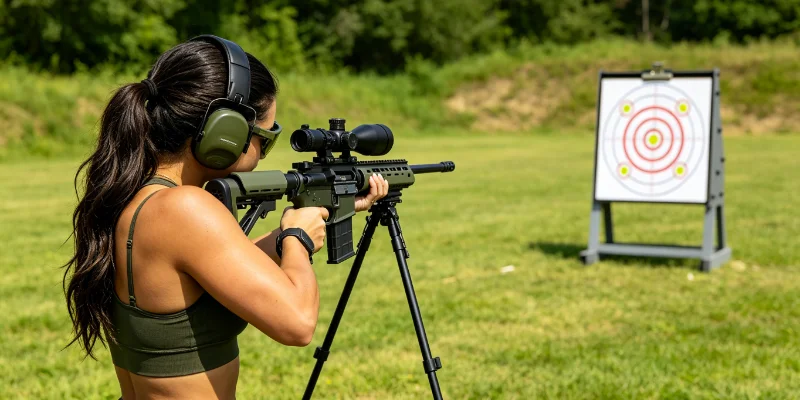
Sourcing shooting gear at wholesale scale requires more than scanning a product catalog. The decisions you make at the category assessment stage, before you place a single order, determine whether your inventory will move, meet safety expectations, and hold up to customer scrutiny. Whether you are building a private label line, filling retail shelves, or managing OEM supply across multiple markets, the product groups you choose and the suppliers you qualify will shape your margins and your reputation.
This guide is written for B2B buyers, importers, and sourcing managers who need a clear framework for evaluating shooting accessories by use case, construction quality, compliance fit, and supplier capability. It covers the product categories most relevant to wholesale programs, including gun bags, slings, bipods, cleaning kits, eye and ear protection, ammo boxes, shell holders, holsters, and optics accessories. If you are ready to move from research to supplier conversations, starting with a manufacturer who has documented OEM export experience across markets like the USA, Europe, and Australia will save time at every stage of the process.
Core Product Categories Buyers Should Assess First
Before narrowing down suppliers, you need a clear view of which product groups carry the most commercial weight in your channel. Featured products and new products entering the market tend to cluster around range-use essentials, precision support tools, and protective or maintenance items, each serving a distinct buyer need within the broader shooting category.
Range And Carry Essentials
Range and carry products are typically your highest-volume SKUs. This group includes gun bags and cases, slings, holsters, shell holders, and ammo boxes. Buyers in this segment should look for practical design details: padded dividers, lockable zippers, MOLLE compatibility where relevant, and material choices that handle regular transport wear.
Gun bags in particular benefit from water-resistant exterior fabrics and reinforced stress points at handles and zippers. Holsters require attention to retention level and draw angle, which vary significantly by end user (recreational, competition, or duty use). Ammo boxes and shell holders should be evaluated for caliber-specific fitment and secure closure under field conditions.
Support And Accuracy Accessories
This category covers bipods, optics mounts, shooting rests, and ballistic support tools. For wholesale buyers, the key variables are compatibility range and adjustability. A bipod that fits only one rifle platform limits your addressable customer base.
Look for products with broad rail compatibility, tool-free height adjustment, and stable leg locks. Optics accessories such as scope rings and bases should be assessed for material grade, torque ratings, and repeat zero retention. These are categories where poor quality leads to visible failures and returns, so sourcing from manufacturers with documented production consistency matters more than price alone.
Protective And Maintenance Items
Eye protection, ear protection, and cleaning kits form the safety and maintenance core of any well-rounded shooting accessories range. These items have clear functional benchmarks: eye protection should meet ANSI Z87.1 or equivalent standards, and ear protection is rated by Noise Reduction Rating (NRR) for ear muffs or SNR for markets outside the US.
Cleaning kits vary widely in scope. For wholesale programs, modular kits that cover multiple calibers with interchangeable brushes and rods offer better shelf appeal than single-caliber sets. Look for brass or carbon steel rod materials rather than aluminum, which can scratch bore surfaces.
How To Evaluate Fit For Use And End Customer Needs
Matching product specifications to actual use conditions is what separates a well-performing wholesale catalog from one that generates returns and customer complaints. Demand patterns across range training, hunting, and retail sale cycles each require a different product mix and feature priority.
Range Training And Recreational Demand
Range buyers prioritize convenience, durability, and ease of use. Products designed for this segment should be intuitive without requiring technical setup. Range bags with organized interior layouts, hearing protection with comfortable headbands for extended wear, and cleaning kits with clearly labeled components are all strong performers here.
For wholesale buyers, recreational demand is relatively stable year-round, with upticks around new firearm purchase cycles. The National Shooting Sports Foundation has documented that first-time gun buyers almost always purchase accessories alongside their first firearm, which creates a consistent pull-through opportunity for range essentials.
Hunting And Field Conditions
Hunting use introduces environmental stress that range products do not face. Gear sold into hunting channels needs to perform in wet, cold, or dusty conditions. Slings should use weather-resistant hardware and non-slip materials. Bipods must hold zero across temperature changes. Gun cases used for field transport need reinforced corners and drain-capable construction.
When sourcing for this segment, ask suppliers about material testing in humidity and temperature ranges relevant to your target geography. A manufacturer with export experience across regions like Australia and Northern Europe will have practical knowledge of these requirements built into their product development process.
Quality, Safety, And Compliance Checks Before Ordering
Quality and compliance checks should happen before you commit to a production run, not after samples arrive. When sourcing accessories that sit adjacent to guns, firearms, and ammunition, the standards your products must meet are non-negotiable and vary by market.
Materials, Construction, And Durability Standards
Material choice is the single most reliable quality signal at the sourcing stage. For soft goods like gun bags, holsters, and slings, look for Cordura 500D or higher denier nylons, reinforced stitching at load-bearing seams, and YKK or equivalent zippers. Cheaper alternatives often use low-denier polyester that wears through quickly under regular use.
For hard goods such as bipods, cleaning rods, and ammo boxes, ask about the alloy or polymer grade used and whether the supplier can provide material certificates. Anodized aluminum components should show uniform finish with no pitting. Injection-molded parts should be free of sink marks, flash, or misalignment at mold parting lines.
Safe Storage, Transport, And Accessory Compatibility
Products that interact with firearm storage and transport must meet specific functional standards. Gun cases sold in the US market should accommodate TSA-approved locking mechanisms for air travel compliance. Soft cases need foam or padding density sufficient to absorb impact without transmitting shock to optics or action components.
Accessory compatibility is equally important. A holster designed for a specific platform must fit precisely; a loose retention fit creates a safety risk and a return. When evaluating samples, test fit against the most common platform variants in your target market. Cleaning kits should specify caliber coverage clearly so end customers do not receive mismatched components.
Legal Boundaries Around Guns, Firearms, And Ammunition
Wholesale buyers sourcing accessories in the shooting category need to understand where accessory sales cross into regulated territory. In the US, accessories such as suppressors, certain magazine capacities, and some optics modifications fall under state or federal regulation. Selling items that inadvertently enable restricted modifications creates legal exposure for your business.
Accessories that are adjacent to ammunition, such as shell holders, reloading dies, and ammo boxes, are generally not regulated as firearms or ammunition themselves, but marketing language matters. Avoid supplier descriptions that position accessories as enabling modifications that may be restricted in your target market. A supplier with documented FFL-adjacent compliance experience or export compliance knowledge will be better equipped to flag these issues early.
How To Compare Suppliers For OEM And Wholesale Programs
Evaluating suppliers goes beyond price lists and product photos. The right manufacturing partner will support your program across product development, order fulfillment, and post-sale service. Customer service reliability and OEM capability should be assessed with the same rigor as product quality.
Customization, Packaging, And Product Development Support
OEM capability is not uniform across manufacturers. Some suppliers can handle full private label programs including custom colorways, embroidered or debossed logos, branded packaging, and product spec modifications. Others offer only stock items with a label change.
When evaluating OEM readiness, ask for examples of past customization work and the minimum order quantities (MOQs) required for each customization tier. Packaging design support, artwork file requirements, and carton labeling for your target market (UPC codes, country-of-origin marking, compliance labeling) should all be clarified before signing a supply agreement. A manufacturer like Singland, which has been producing and exporting hunting, shooting, and tactical accessories since 2009, can serve as a reference point for the level of OEM documentation and product range you should expect from a qualified partner.
Lead Times, Service Reliability, And Customer Service
Lead time commitments need to be realistic and verifiable. Ask suppliers for their average production lead time by product category, and request data on on-time delivery rates from existing customers. A supplier who cannot provide this data has not built the operational tracking systems that a reliable wholesale program requires.
Customer service quality often becomes visible only after problems arise. Before committing to a supplier, test their responsiveness with a detailed pre-sales inquiry. Evaluate whether they assign a dedicated account contact, communicate proactively about production updates, and respond to technical questions with accurate information rather than vague reassurances.
Credentials, Reviews, And Warranty Signals
Supplier credentials include factory audits, ISO certifications, export licenses, and compliance documentation relevant to your target markets. For US-bound imports, ask about CPSC compliance history and whether the supplier has worked with US-based importers or distributors before.
Customer reviews and reference accounts provide practical insight that credentials cannot. Ask for introductions to two or three existing wholesale customers and verify whether the supplier honored warranty claims or resolved quality disputes without excessive friction. A clear, written warranty policy with defined defect thresholds and replacement procedures is a basic signal of a supplier that takes post-sale accountability seriously.
Frequently Asked Questions
What essential equipment should a beginner buy for a safe day at the range?
A first range visit requires hearing protection, eye protection, and a secure bag to carry your firearm and ammunition. Beyond those basics, a cleaning kit, spare magazines, and a sturdy target stand will cover most range-day needs without overcomplicating your setup.
How do I choose the right hearing protection for indoor and outdoor shooting?
For indoor ranges, electronic ear muffs with a high NRR (30 or above) are the better choice because they suppress sharp report noise while allowing you to hear instructions and communication. Outdoor shooters often use foam earplugs alone or combined with lower-NRR muffs, since sound dissipates more quickly in open environments.
What features should I look for in protective shooting glasses?
Look for lenses rated to ANSI Z87.1 or a military ballistic standard such as MIL-PRF-31013. Wrap-around coverage, impact-resistant polycarbonate lenses, and an adjustable nose piece for secure fit are the key functional features. Lens tint options matter too: clear for indoor use, amber or yellow for low light, and gray or smoke for bright outdoor conditions.
Which accessories are most useful for improving accuracy and consistency?
A quality bipod, a stable shooting rest, and a well-zeroed optic are the three accessories that produce measurable improvement in accuracy for most shooters. These tools reduce shooter-induced variables, allowing you to identify and correct technique issues more reliably than shooting unsupported.
How can I tell whether tactical equipment is worth the price for my needs?
Start by matching the product spec to your actual use conditions rather than comparing price to features you will not use. A heavy-duty plate carrier rated for duty use adds unnecessary cost and weight for a recreational shooter. Evaluate whether the item’s construction, material grade, and warranty align with your frequency of use and the conditions it will face.